

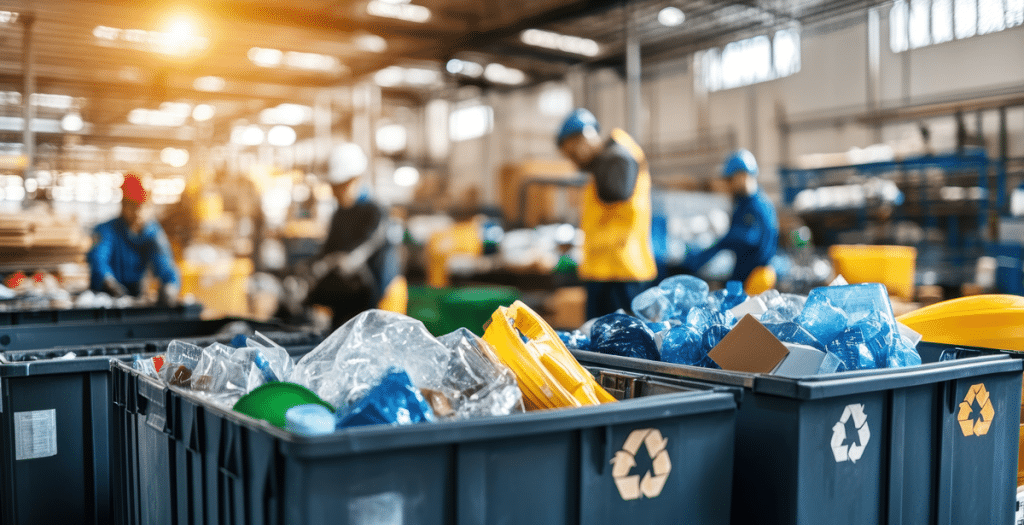
Recycling facilities face a constant challenge: how to quickly and accurately separate many different types of plastic that look similar on a fast-moving conveyor belt. The National Institute of Standards and Technology (NIST) explainer “How Do Recycling Facilities Sort Different Kinds of Plastic?” walks readers through the journey a plastic item takes after it enters a materials recovery facility, from initial mechanical sorting to more advanced separation steps. The article highlights the growing role of optical technologies, such as near-infrared (NIR) spectroscopy, which can identify plastics by how they interact with light rather than just by shape or label.
For manufacturers and recyclers focused on circular economy goals, NIST’s work underscores why better measurement and sensing techniques are critical to improving both the quality and volume of recycled plastics. By enhancing the ability to distinguish between resin types that cannot be mixed, these technologies help prevent contamination, increase the value of recycled streams, and support more efficient, automated systems that can scale with demand. The piece offers accessible, real-world context for how advanced metrology and AI-enabled tools are reshaping recycling infrastructure and enabling more sustainable materials management. Read the entire article here.