

By Eric Fasser
Solutions Program Manager, FuzeHub
For many entrepreneurs and startup founders, building a prototype feels like the first major milestone on the journey from simply having an idea to developing a viable business. Seeing your concept take physical form is exciting. It can also be tempting to focus on perfecting the design before taking the next step.
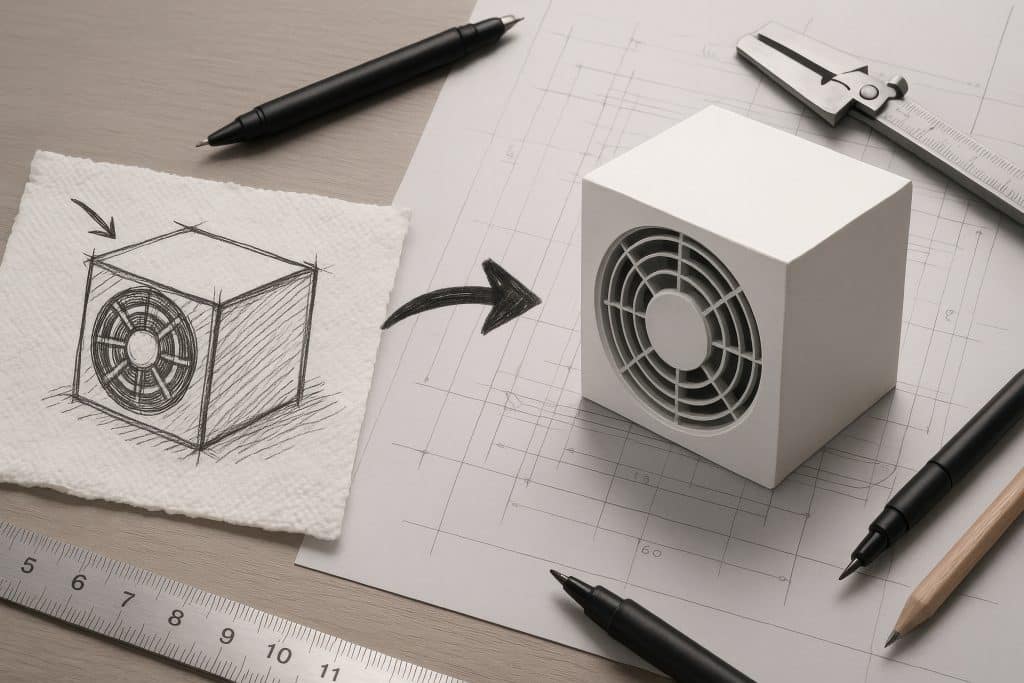
However, the most successful innovators understand that a prototype is not the destination – it’s a tool on the path to commercialization.
Start by Validating the Problem
Whether you call it a proof of concept, alpha/beta prototype, or minimum viable product, the purpose remains the same: reduce uncertainty and gather information before investing significant time and money. A prototype should help answer one critical question: Does this just solve a “me” problem, or does it solve a real problem that a significant number of customers are willing to pay to solve?
And to answer that question, you need to have conversations with potential customers long before the prototype is even complete. This process, often called customer discovery, helps you understand who your customer is, what challenges they face, and whether your proposed solution truly addresses their needs. It can also uncover key features and benefits the customer expects and help determine target price and cost levels.
Programs such as NSF I-Corps have helped countless entrepreneurs test assumptions and refine their understanding of customer needs before making major investments in product development. For example, if you’re developing a medical device, your customer may not be the patient who benefits from the product. It could be a physician, hospital purchasing department, healthcare provider, or insurance company. Understanding who makes the purchasing decision is just as important as understanding who will ultimately use and benefit from the product.
The lessons learned through customer discovery often led to significant changes in product design that improve the product’s chance of success, so the earlier you understand your customer, the more valuable your prototype becomes.
Don’t Overlook Intellectual Property
As your concept begins to take shape, intellectual property (IP) considerations become increasingly important.
Many startups worry about competitors copying their ideas. While protecting your innovations through patents, trademarks, copyrights, or trade secrets may be appropriate, there’s another side of the equation that is equally important: ensuring you aren’t infringing on someone else’s IP.
Conducting an IP review early in the development process can help identify potential obstacles before they become expensive problems. It can also provide insight into existing technologies, competing solutions, and opportunities for differentiation.
Developing an IP strategy doesn’t necessarily mean filing patents immediately. It means understanding what you’re building, what protections may be available, and how IP fits into your overall commercialization plan.
Think Beyond the Prototype
A common mistake among hardware startups is assuming that a prototype can easily transition into production.
Today, technologies such as 3D printing allow entrepreneurs to create sophisticated prototypes quickly and affordably. These tools are excellent for testing form, fit, and function, but may not be suitable for large-scale manufacturing.
This is where Design for Manufacturing (DFM) becomes critical.
DFM involves designing products with manufacturing processes, material selection, assembly requirements, and production costs in mind. Decisions made early in product development can significantly reduce future manufacturing costs and facilitate scalability.
Conversely, waiting until the product is almost fully developed before considering manufacturing often leads to redesigns, delays, and unexpected expenses (including re-tooling costs and unusable component inventory). By incorporating DFM principles early, startups can create prototypes that not only demonstrate functionality but also provide a realistic pathway to commercialization.
In other words, the best prototype isn’t always the one that looks the most polished – it’s the one that helps you move efficiently toward production.
You Don’t Have to Do It Alone
Fortunately, New York State entrepreneurs have access to a robust network of organizations that can help throughout the product development process.
Centers of Excellence, Centers for Advanced Technology, business incubators, accelerators, makerspaces, and manufacturing support organizations provide expertise, facilities, and guidance that can help startups overcome technical and business challenges. These resources can assist with everything from customer discovery and engineering support to manufacturing strategy and commercialization planning.
If you’re looking for a hands-on crash course where subject-matter experts can help you navigate these challenges in person, consider attending FuzeHub’s Product Development Workshop on August 12, 2026 in New Paltz, NY. This event was created to help innovators learn how to validate product ideas, develop IP strategies, maximize the value of their prototypes, plan manufacturing pathways, identify funding opportunities, and build a commercialization roadmap. The goal is not simply to help entrepreneurs build products, it’s to help them build businesses. You can learn more and register here: https://fuzehub.com/product-development-workshop-2026/
Prototype with a Purpose
A prototype should do more than prove that something can be built. It should help you answer important questions about your customers, your technology, your intellectual property, and your path to manufacturing.
The startups that succeed are rarely those with the best prototype. They’re the ones that use prototyping as a learning process, to test assumptions, gather feedback, and reduce risk at every stage.
When approached with purpose, a prototype becomes more than a model. It becomes a roadmap to commercialization.